
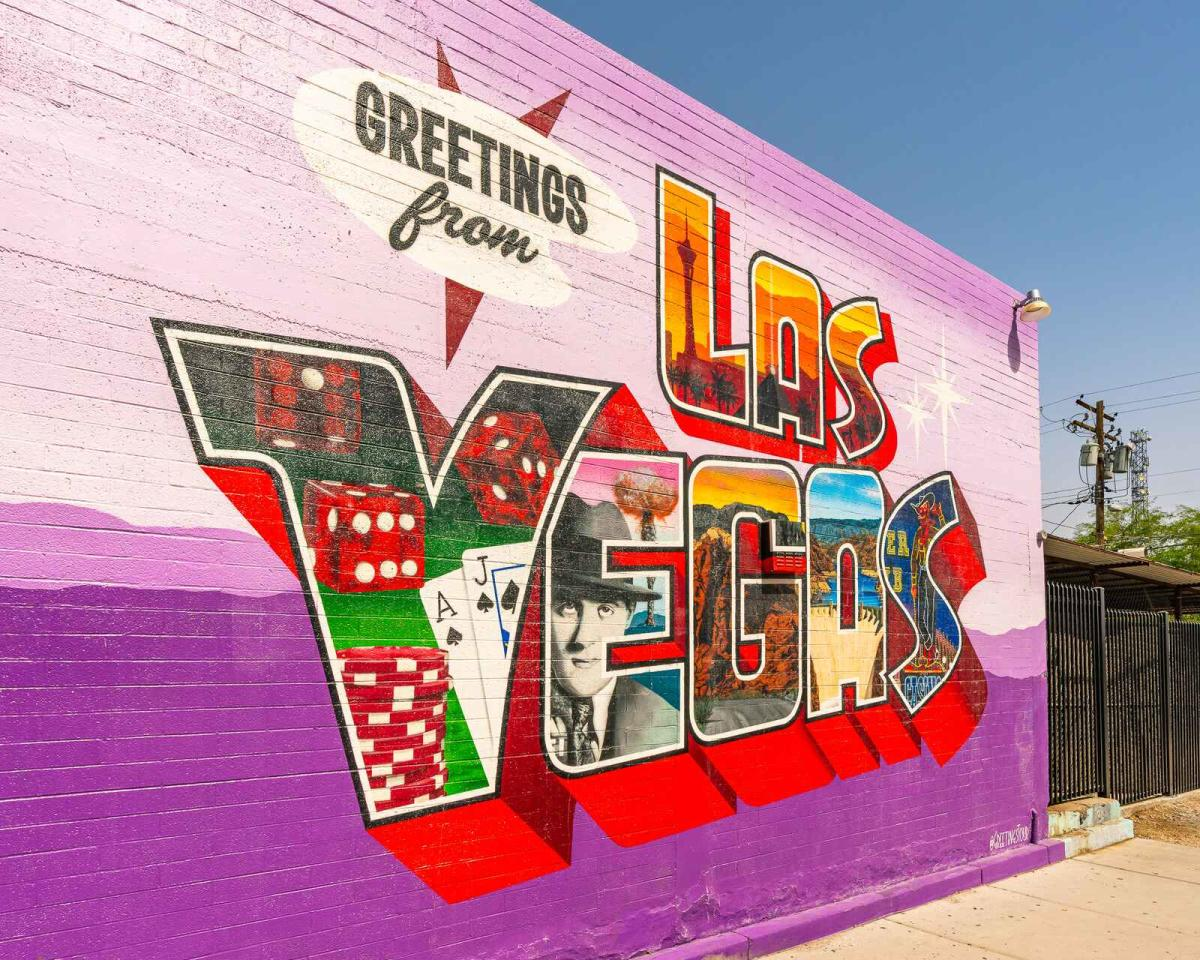

If Oakland’s Temescal, SF’s Mission District, Berkeley’s Fourth Street plus the tourist buzz from Pier 39 had a desert baby, it would be Downtown Las Vegas. This is the city’s oldest core, containing a vibrant mix of mid-century homes, funky converted warehouses, indie cafés, neon nightlife, and the kind of creative energy that feels like “I could reinvent myself here.”
For Bay Area transplants who miss real street texture, walkability, culture, art and community, Downtown offers the closest thing to urban living outside the Strip. And yes, homes in this neighborhood are still pretty affordable compared to the Bay. But Downtown living isn’t for everyone, which is exactly why this guide breaks it all down: the vibe, the pros, the cons, and what Bay buyers need to know before they fall in love with the Arts District over craft cocktails.
Downtown Las Vegas Has 3 Distinct Micro-Neighborhoods
First, it’s important to know that when people say “Downtown Las Vegas,” they usually picture Fremont Street, with its casinos, live music and pulsing tourist core. But for locals and Bay Area newcomers, Downtown is really three unique worlds woven together: the restaurants and bars of Fremont East, the creative backbone of the Arts District, and the quieter historic residential pockets tucked just outside the main strip. Each one has its own rhythm, and together they create a version of Vegas that feels walkable, social, and very different from the suburbs most transplants initially consider.
Fremont Street Experience
Bay Area Equivalent:
Pier 39 / Tourist-heavy SF core
Vibe:
Loud, bright, crowded, casinos, canopy energy
Best For:
Visitors, nightlife outings, people-watching
Fremont East
Bay Area Equivalent:
Uptown Oakland / Lower Mission
Vibe:
Indie bars, speakeasies, cool restaurants, walkability
Best For:
Young professionals, creatives, foodies
Arts District / 18b
Bay Area Equivalent:
Temescal + Mission murals + LA Arts District
Vibe:
Murals, breweries, vintage shops, galleries, community events
Best For:
Locals, remote workers, artists, people who want culture
Downtown Las Vegas for Bay Area Buyers: What Actually Works
1. The Creative Energy
If you thrive around artists, makers, nontraditional entrepreneurs, DJs, designers and people who don’t need everything to look polished, Downtown feels familiar. The energy is more Oakland-meets-LA-Arts-District than Vegas Strip. It has that slightly gritty magic that sparks inspiration, and for Bay folks from SF, Oakland and some parts of San Jose, it might feel a bit like feels like coming home without the Bay Area price tag.
2. Walkability You Don’t Have to Pay $3M For
No shade to Summerlin (love her), but Downtown is one of the few Vegas areas where you can park your car and actually live a little on foot. Coffee. Dinner. Cocktails. Vintage shopping.
It’s not wall-to-wall walkability like in many parts of SF, but the pockets that are walkable do feel authentic and lively. And being able to stroll between dinner, a brewery, and a live music spot feels like a luxury when you’re used to Bay Area parking trauma.
3. Homes With Character
The homes you’ll find here will hardly feel like another beige stucco box. People choose Downtown for:
mid-century homes with personality
historic neighborhoods (Huntridge, McNeil, John S. Park)
industrial lofts
converted live-work spaces
urban condos with skyline views
It’s a whole different flavor than any other Vegas suburb. And if you’re coming from Oakland, Berkeley, or Alameda, the charm factor feels refreshingly familiar
4. Community + Culture
Downtown is on the the hubs where Vegas locals actually gather, from First Friday art festivals and Fergusons Market to Brewery Row, vintage shops, tattoo studios, indie restaurants, Container Park, and the non-touristy side of Fremont East. It’s the part of the city where you see the same faces and slowly become a “regular” without even trying. There’s a real sense of soul here, the kind Bay transplants recognize immediately. And that feeling of community you can’t fake or master-plan.
Fun Things To Do in Downtown Las Vegas
What surprises most Bay Area buyers is how much there actually is to do in Downtown and how different it feels from the Strip. Fremont Street is the obvious anchor, with live music, open-air bars, and walkable nightlife that feels absolutely electric will being pretty casual. when you want something curated and cinematic, Container Park fires up movie nights, live music, and family-safe events right under the open sky. Just off the main drag, the Fremont East District is packed with local favorites: Commonwealth with its rooftop views, The Sand Dollar Downtown for live jazz and vinyl nights, and the speakeasy-style The Laundry Room if you’re into reservations-only cocktails.
The Arts District adds another layer of energy: gallery walks, brewery patios, tattoo studios, vintage markets, and dining spots like Soulbelly BBQ and Vesta Coffee Roasters that turn casual errands into hangouts. Unlike the strip, downtown isn’t about casinos it’s about real social life within a few blocks.
Downtown Vegas at a Glance
On mobile? Swipe left to see the rest of the table.
| Feature | Bay Area Equivalent | Downtown Las Vegas |
|---|---|---|
| Art & Culture | Oakland’s Art Murmur, SF Mission murals | The Arts District (18b), First Friday, murals everywhere |
| Walkability | Downtown Berkeley / Temescal | True walkable pockets, cafés, bars, markets, galleries |
| Nightlife | Lower Mission / Uptown Oakland | Fremont East, Container Park, indie bars + speakeasies |
| Housing Options | Oakland bungalows, SF lofts | Mid-century homes, renovated lofts, new high-rise condos |
| Median SFH Price | $1M+ for anything central | ~$400K–$550K for mid-century homes |
| Commute Vibe | BART + AC Transit | Quick freeway access + short city hops |
| Community Feel | Artsy, eclectic, local | Similar in the best ways |
The Housing Reality at $400K in Downtown Las Vegas
Downtown Las Vegas is one of the rare urban cores in America where $400K can buy you something that feels substantial. The housing stock in this part of the city leans modern condos, loft-style units, boutique midrise buildings, and townhome-style layouts rather than cookie-cutter subdivisions. Think steel and concrete towers with floor-to-ceiling windows, secure parking, gyms, pools, rooftop decks, concierge desks, and communal spaces designed to foster an actual lifestyle. You’re not inheriting 40 years of deferred maintenance or retrofitting a 1960s electrical system, instead you’re stepping into a building designed for how adults live right now.
What makes Downtown Las Vegas for Bay Area Buyers so compelling is not only price, but also how the neighborhood functions day-to-day. You can walk to craft cocktail bars, grab dinner in the Arts District, or settle into a condo that doesn’t require a full weekend of maintenance. At $400K in Downtown, a buyer can reasonably expect:
1–2 bedrooms
~800–1,200 sq ft
Assigned or garage parking
Amenities (gym, pool, lounge, or shared outdoor space)
Walkability to Fremont East, the Arts District, and everyday errands
You’re trading yard space for convenience and access, something most Bay Area buyers understand well because they’ve already lived condo or walkable apartment life. What shifts here is the quality: you get breathing room, amenities, and a city outside your front door, with out the hefty HOA bill or luxury apartment complex rent.
← swipe or scroll left to view the full table →
| Market | What $400K Realistically Buys |
|---|---|
| Downtown Las Vegas | 1–2 bed modern condo or loft, ~800–1,200 sq ft, amenities (gym, pool, lounge), assigned parking, walkable to Fremont East & Arts District. |
| San Francisco | Studio or micro 1-bed, ~450–650 sq ft, older condo buildings, $450–$900/mo HOA, no parking, no amenities. |
| San Jose | 1-bed condo, ~650–850 sq ft, 1980s–2000s complexes, $450–$700 HOA, carport/shared garage, dated interiors, limited community features. |
| Oakland | 1–2 bed condo or converted Victorian unit, ~600–900 sq ft, inconsistent parking, deferred maintenance, “character homes” with future costs. |
| Vallejo | Small 2–3 bed older SFH or townhome, ~850–1,300 sq ft, 1970s–1990s stock, cosmetic updates needed, limited walkability, Bay commute. |
The Downsides of Living in Downtown for Bay Area Buyers
1. It’s Still a Little Rough Around the Edges
If you’re expecting the polished suburban perfection of Summerlin or Green Valley, Downtown is not that. There’s grit, mixed-income density, and pockets that feel more urban than curated.
2. Noise, Activity, and Nightlife Are Part of the Package
With the high density of bars, festivals, street traffic and music, if you’re sensitive to sound, skip this area.
3. Older Homes = Older Systems
Mid-century charm sometimes includes mid-century wiring, plumbing, or roofs that need love. Inspections matter a ton here.
4. Walkability Is Pocketed
You can walk a lot, but not everywhere like in many parts of SF or Berkeley. And like many city cores, some blocks aren’t ideal for late-night strolling.
5. HOAs Are Rare
Which definitely is a perk to some, but also means less uniform upkeep. Expect more individuality, fewer master-planned rules.
Downtown Las Vegas has its quirks, its grit, and its magic, and that’s exactly why so many Bay Area buyers end up loving it. It’s one of the few places in Vegas where creativity, nightlife, culture, and affordability all show up in the same ZIP code.

If you’re exploring a Bay-to-Vegas move and want to see which Downtown pocket actually fits your day-to-day life, I can walk you through the neighborhoods, the market, and the real lifestyle trade-offs so you land somewhere that feels right.